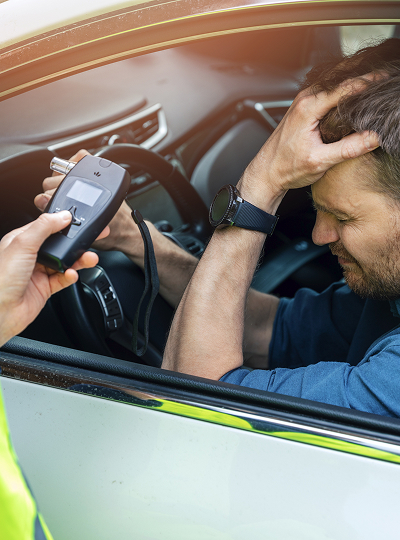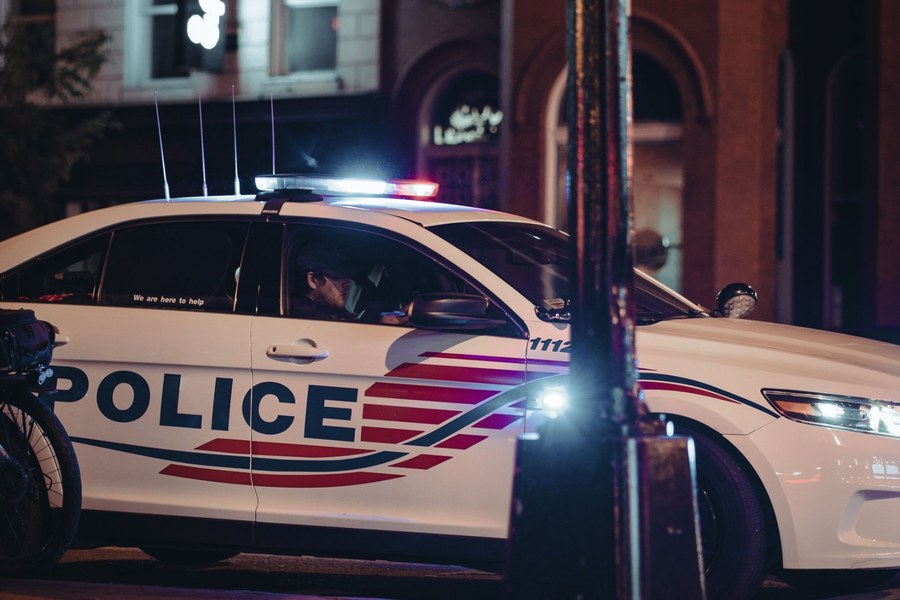
You round a bend on the way home from Thanksgiving dinner and see brake lights, orange cones, and blue lights ahead. Every car is stopping. Your stomach drops, even if you only had one glass of wine hours ago.
Roadblocks pick up across Georgia every holiday season. Knowing the rules police must follow can help you stay calm, and it can matter a great deal if the stop ends in a DUI arrest.
Yes, DUI Checkpoints Are Legal in Georgia, With Strict Limits
DUI checkpoints are legal in Georgia, but only when police set them up and run them the right way. Checkpoints let officers stop you without suspecting you of anything, so courts hold them to firm standards.
The U.S. Supreme Court approved sobriety checkpoints in 1990 in Michigan Dept. of State Police v. Sitz. Georgia does not have a statute that spells out checkpoint rules. Instead, the rules come from court decisions, mainly LaFontaine v. State (1998) and Brown v. State (2013), both from the Supreme Court of Georgia.
If a checkpoint breaks those rules, the stop itself can be unconstitutional. That can knock out the evidence gathered after it.
The Five Requirements Every Georgia Checkpoint Must Meet
Under LaFontaine, a roadblock is valid only when the State can show that:
- A supervisor made the decision to set up the checkpoint, not officers working in the field
- Every vehicle is stopped, not just cars officers pick at random
- The delay to drivers is minimal
- The checkpoint is clearly marked as a police checkpoint, with signs, lights, or marked patrol cars
- The screening officer has enough training and experience to decide which drivers should get field sobriety tests
All five must be met. Missing even one opens the door to a challenge.
The Checkpoint Also Needs a Legitimate Purpose
There is a sixth piece. In 2000, the U.S. Supreme Court ruled in City of Indianapolis v. Edmond that police cannot use roadblocks for general crime control, like looking for drugs or anything else they might find. In Brown v. State, the Supreme Court of Georgia explained that the State must prove the checkpoint program had a legitimate primary purpose, decided ahead of time by supervisors.
Checking for impaired drivers, valid licenses, and proof of insurance can qualify. A roadblock set up to catch “any violation whatsoever” does not.
In Brown, the court found that a roadblock set up for DUI enforcement was still unconstitutional because there was no real supervisory planning behind where and how it was run. Details like that are what a defense lawyer looks for.
Why You See More Checkpoints Around the Holidays
The Governor’s Office of Highway Safety runs its “Drive Sober or Get Pulled Over” campaign during high-travel holidays, including the stretch from Christmas through New Year’s. State troopers, sheriff’s deputies, and city police often add extra patrols and checkpoints during these periods.
More checkpoints can also mean rushed setups. Holiday roadblocks are often planned on short notice and run late at night in cold weather, which can lead to mistakes in approvals and procedure.
What Police Can Ask You at a Checkpoint
When you pull up, an officer will usually ask for your license, registration, and proof of insurance. You need to hand those over. Officers will also look and listen while they talk to you, checking for the smell of alcohol, slurred speech, or open containers.
Here is what you should know:
- You can stay quiet about where you have been. Questions like “Where are you headed?” or “Have you had anything to drink tonight?” are not required answers. You can politely say you would rather not answer.
- Field sobriety tests are voluntary. If an officer asks you to step out and walk a line or follow a pen with your eyes, you can politely decline.
- Stay calm and polite. Arguing or refusing to hand over your license creates new problems.
- Do not consent to a search of your car. Say so clearly, and do not physically resist.
The rules change if you are arrested. Under Georgia’s implied consent law, O.C.G.A. § 40-5-67.1, refusing the State’s breath, blood, or urine test after an arrest can lead to a license suspension. That decision deserves careful thought, and it starts a 30-day deadline either way.
Can You Turn Around Before a Checkpoint?
Making a legal turn onto another road is not a crime. Still, it may not get you out of a stop. Georgia courts have upheld some stops of drivers who appeared to be avoiding a roadblock, and some agencies post officers near the checkpoint to watch for drivers who turn away.
What matters is how you turn. An illegal U-turn, a rolling stop, or swerving across a lane hands an officer a separate reason to pull you over, checkpoint or not.
How a Bad Checkpoint Can Help Your Case
If you were arrested for DUI at a roadblock, the State has to prove the checkpoint was lawful once your lawyer challenges it. Your attorney can file a motion to suppress and ask for records such as:
- The written approval or order creating the checkpoint
- Who made the decision, and when
- The planned time, location, and purpose
- The officers assigned and their roles
- The screening officer’s training and DUI experience
- Video from dash cameras and body cameras
If the State cannot prove the checkpoint met every requirement, the stop may be thrown out. That matters even more in Georgia than in federal court. Georgia does not recognize a “good faith” exception to the exclusionary rule, so evidence from an unlawful stop cannot be saved just because officers believed they were following the law.
When the stop goes, the field sobriety tests, test results, and officer observations can go with it. Many cases end in dismissal or a reduced charge at that point.
What to Do If You Were Arrested at a Checkpoint
A few steps protect you after a checkpoint arrest:
- Watch the 30-day license deadline. You have 30 days from the arrest to request a hearing with the Department of Driver Services or choose an ignition interlock permit, depending on your situation.
- Write down the details. Note the location, time, signs, lighting, how long you waited, and what officers said.
- Do not talk about the case on jail phones or social media.
- Talk to a DUI defense lawyer early, before video is lost and while the checkpoint records can still be requested.
Get Answers After a Georgia Checkpoint Arrest
A checkpoint arrest is not the end of the story. The State has to prove the roadblock was set up and run the right way, and that is often where these cases are won.
At J. Ryan Brown Law, we take a close look at every checkpoint DUI, from the supervisor’s approval to the officer’s training records. We help drivers in Newnan, Carrollton, Palmetto, Hiram, Cedartown, Douglasville, and across Georgia protect their licenses and their records.
Contact us today for a consultation. We answer 24/7.
Author Bio

J. Ryan Brown
Founder
Ryan Brown is a Georgia criminal defense lawyer and trial attorney dedicated to defending the accused in Newnan and across the state. A graduate of Georgia State University College of Law, he has argued cases in Georgia Superior Courts, the Court of Appeals, and the Georgia Supreme Court. His memberships in the Georgia Association of Criminal Defense Lawyers and the Bleckley Inn of Court reflect his standing in the legal community.
Known for his relentless approach, Ryan is committed to protecting clients from the full power of the State. He builds strategic, fact-driven defenses designed to secure the best possible outcome, no matter the charge. When your future is on the line, Ryan Brown has the skill, experience, and determination to fight for you in court.